Category Archives: Lyme Basics

Video: Young Freeskier Makes Comeback Following Lyme Treatment

LymeLight – The Story Of Professional Freeskier Angeli VanLaanen Living With Lyme Disease from NEU PRODUCTIONS on Vimeo.

Considering that I can’t even walk my dog around the block right now, this story of an amazing athlete’s return to health was an especially great find.

Freeskier Angeli VanLaanen made this film because she wants others with lyme know that they are not alone—and that recovery is possible.

Click on “play” above to hear her talk about how she was probably infected with lyme disease as a ten-year-old girl by tick bites she got in Wisconsin; Angeli was misdiagnosed during many years of dealing with various symptoms.

Continue reading

Video: “The Biology of Lyme: An Expert’s Perspective”

Meet Dr. Alan MacDonald. Okay, so he’s a little wonky when he goes into the scientific details—he’s a pathologist. But remember, those details speak to his credibility. And in this July 2013 YouTube video, he serves up some excellent big-picture explanations that we can all understand.

You might be surprised by some of the details he offers in a variety of areas, including these (keep your cursor on the bottom of the screen to keep minutes visible and zoom to these highlights):

  • what we can learn from syphilis as it relates to its “cousin” Lyme (4:00)
  • how Lyme infects just about any part of the human body (6:15)
  • what MacDonald found when studying the brains of people who had dementia (8:19)
  • how the current U.S. Lyme test is based on only one strain, although there are at least 100 known here—and more in Europe (8:28)

The ongoing work of dedicated researchers like Dr. MacDonald is critical to filling the holes in current knowledge about Lyme disease.

Continue reading

5 Medical Appointments to Add to Your Lyme List

Medical centre

Credit: ashroc’s flickr stream

Coping with persistent Lyme—or any serious illness that goes on for a long time—often becomes a part-time or even full-time job.

With so many medical appointments and medications to keep track of, not to mention feeling rotten, you might be letting some important things slide.

Here’s a reminder of items to put on your calendar:

    1. Dental check-up and cleaning. See your dentist once a year; neglecting your teeth could cost you in the long run. Your dentist not only catches problems with your teeth before they reach a crisis stage, but checks for mouth cancer as well. Untreated gum disease can lead to the loss of your teeth; studies suggest it may cause strokes or heart attacks. 
    2. Colonoscopy. The schedule varies depending on your age, race, and family history. Colon cancer may not cause symptoms until it is pretty advanced. Don’t take chances.
    3. Annual skin check—or an immediate appointment if you see something suspicious. Skin cancer rates are higher than those for any other form of cancer. A dermatologist can readily recognize both dangerous skin cancers and potential troublemakers, hopefully catching them before they spread. This infographic from the American Cancer Society tells the story.
    4. Gynecological/Prostate exam. Okay, so no woman or man looks forward to these appointments. But getting checked out sure beats the life-threatening alternative.
    5. Eye exam. See your doctor at least every two years for things like macular degeneration and glaucoma (yearly if over 60) and be sure to alert the doc to your lyme infection, which may impact your eyes.

And don’t forget your annual physical. Your Lyme literate doctor is covering a lot of bases, and may well catch something amiss that’s not related to tick-borne infections.

Nonetheless, it’s important to maintain appointments with your primary care physician, who goes through an exam with a fresh eye and check basics like cholesterol. Put your general practitioner and Lyme doctor in touch to ensure that your care is complete.

Burning Feet

I’m pretty sure most people around the world who aren’t living with Lyme think the symptom list is this simple and straightforward:

  • bull’s-eye rash
  • flu-like symptoms

And I reckon that this false belief is a major reason persistent Lyme disease continues to be missed in people with a wide range of complaints physical, cognitive, and emotional.

Continue reading

Babesiosis: Multiple Strains Complicate Diagnosis

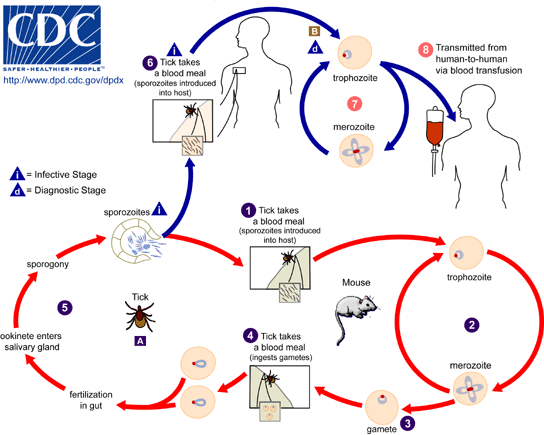
When I finally arrived at the door of a Lyme Literate Doctor (LLMD), I was surprised to learn that in addition to Lyme, I have an infection of the red blood cells called Babesiosis, caused by a tiny parasite.

Symptoms can include fatigue, drenching sweats, muscle aches,  and nausea; the infection often begins with a high fever. It can also attack the spleen.  I got mine from a tick bite. People also become infected through blood transfusions. 

The thing is, if you are treated for Lyme but you also have this co-infection going undetected and untreated, your health won’t improve, as seen in a recent television program about a young girl in Maryland who wasn’t improving when treated for Lyme alone. 

Continue reading

Video: Babesiosis, From a Tick to Your Blood Cells

This video on YouTube gets up close and personal, a fascinating view of how ticks transmit the coinfection babesiosis.

Check out the tiny size of young ticks, or nymphs. Wow. No wonder infected people often never see them.

Then learn what happens once the parasite gets inside the human body. Symptoms can include drenching sweats, fatigue, and muscle aches. Click here to read a story from the New York Times about the potential impact of babesia on the spleen.

Noted on YouTube:

Special thanks to Rick Smith at The University of Rhode Island for narration; Rick’s brother was recently diagnosed with Lyme disease. To learn more about Tick Bite prevention, please visit http://www.TickEncounter.org

Video: Controversy Over Lyme in Australia

It’s not just places in the U.S. where people are told, “No lyme here.”

In this video posted on YouTube from Australia’s “Today Tonight” (aired 13 February 2012), a government health official says people with lyme in Australia most likely got infected elsewhere.

Patients interviewed say otherwise.

Note: For those not familiar with lyme at its worst, I must warn you that the interviews are graphic examples of the suffering inflicted by persistent lyme disease.

See another “Today Tonight” lyme report about a 3-year-old infected with lyme here.

And here’s research on coinfections in Australia. 

For more information on lyme down under, visit the Lyme Disease Association of Australia. 


Video: Proposed Lyme Bill in Virginia Would Inform Patients that Lyme Tests are Inaccurate

Did you hear whoops of excitement from Virginia this week?

A history-making bill (SB971) that would require doctors to inform patients of the inaccuracy of Lyme testing is under consideration right now in my great state. I would have traveled to Richmond to support the bill in person, if I weren’t so ill with lyme myself.

Above is a video from YouTube of the January 29 debate in the state Senate earlier this week. If you are aren’t a hearing junkie, scan for the opposition’s argument, and fast-forward to these sections for compelling highlights:

[15:15] Senator Richard H. Black, who introduced this bill.  When asked if consideration has been made as to how the bill could intrude on patient/physician relationships (many doctors oppose the bill), Senator Black replies respectfully, “I have tremendous faith in our physicians and I believe in their ability to do their jobs. I feel like in this particular area [Lyme disease] that this is a measure that would be of assistance and I think that it is something we owe to the people in the vast areas of  Virginia that are afflicted by this.”

The Senator then cites incidence charts [21:15] and says that while his district is ground zero for Lyme in Virginia, other areas also have a very high incidence.

Continue reading

Video: “Under Our Skin”

If you haven’t seen the compelling and award-winning lyme documentary “Under our Skin” by Open Eye Pictures, check out the trailer above from YouTube.  It doesn’t seem to be streaming for free any more but see below for info on how to buy it or arrange a screening in your area.

Through interviews with people living the nightmare of chronic lyme as well as the doctors and researchers deeply committed to helping them recover, you’ll learn about this hidden epidemic.

It’s all here, from the shameful treatment of many patients by some in the medical establishment who deny the very existence of persistent lyme to the inaccuracies of testing and the impacts of this insidious illness on individuals and families.

You’ll also hear success stories from people who found health again thanks to lyme literate doctors. If enough people see this film, maybe we can attain the long overdue public awareness and action this health crisis deserves.

To buy the DVD, find out about screenings in your community, or to sign up to host a screening, visit www.underourskin.com.

UPDATE: The sequel, an Academy Award runner up, is now available! PLEASE SHARE ON SOCIAL MEDIA AND EMAIL. We need this information to reach beyond those already impacted.

Guest Post: Top Ten Tips to Prevent Chronic Lyme Disease

logoteEveryone, everywhere should read these tips from experts at the International Lyme and Associated Diseases Society (ILADS), reproduced here from the ILADS website with permission.  

Chronic Lyme disease patients may face a long hard fight to wellness. People with chronic Lyme can have many debilitating symptoms, including severe fatigue, anxiety, headaches, and joint pain. Without proper treatment, chronic Lyme patients have a poorer quality of life than patients with diabetes or a heart condition.

The fact is Lyme is a complex disease that can be highly difficult to diagnose. Reliable diagnostic tests are not yet available which leaves many—patients and physicians alike—relying on the so called “telltale signs” of Lyme disease: discovery of a tick on the skin, a bull’s eye rash, and possibly joint pain. However, ILADS research indicates that only 50%-60% of patients recall a tick bite; the rash is reported in only 35% to 60% of patients; and joint swelling typically occurs in only 20% to 30% of patients. Given the prevalent use of over the counter anti-inflammatory medications such as Ibuprofen, joint inflammation is often masked.

Continue reading