When I was felled by Lyme, my college roommate Tracey said, “I know you don’t see it this way right now, but your Lyme battle is going to change your life in good ways, too.”
My immediate response was, “Yeah, right. Lyme is a nightmare.”
I’m no stranger to major loss. As a teenager, I lost my beloved family home and other ties to childhood in the wake of huge financial losses for my parents.
Then came the death of my father after a five-year struggle with lymphoma. Later came the excruciatingly slow passing of my mother-in-law to Alzheimer’s, and my own mother’s declining memory.
The holidays, a touchstone to the past, intensify the grief. I feel it in every cell of my being.
Recently I said to my therapist, who is helping me get through the many stresses of chronic lyme, “A year ago, I thought I had a handle on the losses lyme has sent my way. And I sure thought I had processed all that grief from childhood, and all that terrible pain from the breakup of my family. Why am I so overwhelmed all over again?”
And she said, “Because grief is like a rubber-band ball.” Continue reading →
On a day like today when pain and other symptoms ratchet up and I am totally lymed-out, I can’t get outside to restore my spirits with a healing dose of Nature.
I’ve found, however, that online natural history videos can be a decent substitute. I’ve really been missing my work in ocean conservation, so this one called “Saving Valentina” by the Great Whale Conservancy caught my attention.
I share it here not only because it is one of the most amazing wildlife videos I have ever seen, but also because it says so much about life. Sure, it conveys the stunning beauty of whales.
But this story also celebrates the individual action that can make a big difference: Action by a few people in a tiny boat with one small knife saving the life of one of the largest creatures on Earth.
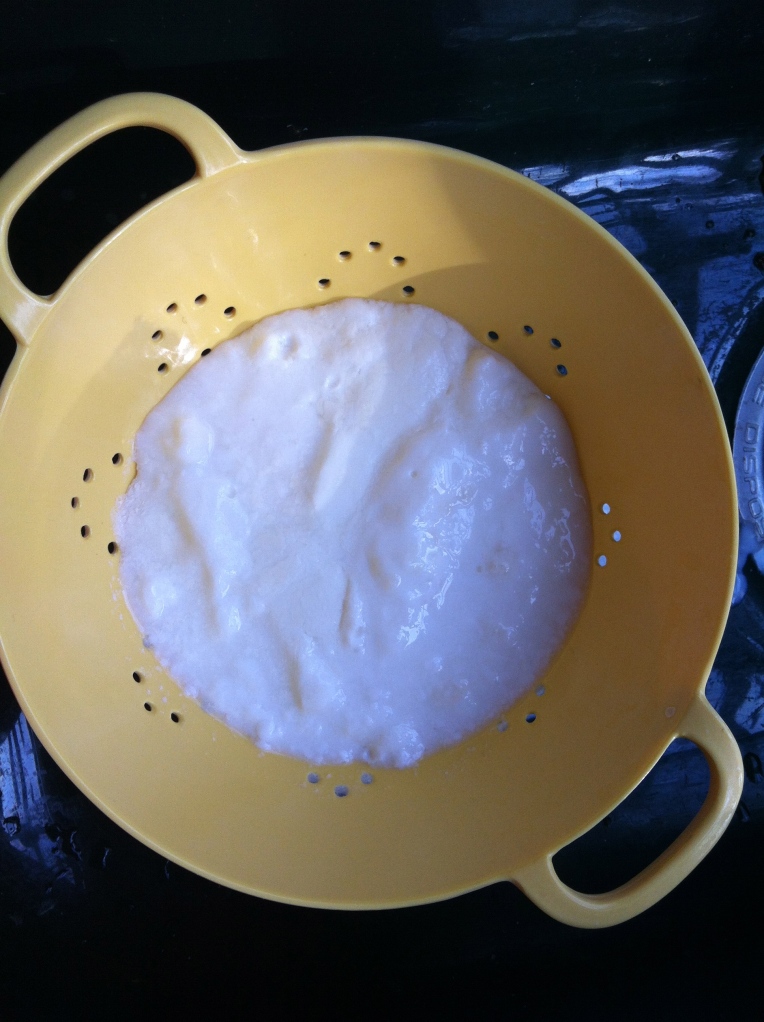
I let my kefir sit long enough to get creamy; sourness increases with time.
I’d never heard of kefir until my wise and wonderful acupuncturist encouraged me to try it as part of my recovery regimen for Lyme disease. Explaining that the fermented drink has many benefits and would boost my struggling immune system, he pressed a small packet of the starter culture into my hand to take with me.
I read up on this ancient superfood, and discovered its rich history over many centuries. Legend has it that long ago, shepherds in the Caucausus Mountains discovered that milk they carried in leather pouches fermented into tasty kefir as they rambled with their sheep.
Another story says that kefir was a gift to Orthodox Christians in the region from Mohammed, who warned them it would lost its miraculous health benefits if they shared it. People held it close, but kefir inevitably began to spread as its value came to light.
The people of the Caucausus are famous for being long-lived; maybe I could enjoy some of the same benefits. Kefir is loaded with vitamins, calcium, and fiber along with health-promoting bacteria. The National Kefir Association says this drink typically contains three times the probiotics of yogurt.
“The Scream” by artist Edvard Munch. Credit: Christopher Macsurak’s Flickr stream
Sometimes during my recovery, I want to scream. But I tell myself to hang on. Because with Lyme, you often have to feel worse to get better. Welcome to the Jarisch-Herxheimer Reaction, or “herxing.”
Today, for instance, my chest is tight and burning, and there’s an uncomfortable sensation like ice water running through my veins. I feel ill all over, like you do when you have the flu or a high fever.
There’s more: Joints in my left foot throb, along with both knees and hips. My legs and arms are on fire with a burning pain deep in the tissue, as is my digestive tract. Add in weak muscles and low energy, and you can see why I’m on the sofa.
On the worst days, I don’t feel up to reading or watching a movie or visiting with a friend by phone. All I want to do is lie here. I’m good with that. Here’s why.
My all-time favorite gift to receive at holidays—or any time—has always been a vase full of colorful, fragrant flowers. But lately, I have to admit that practical gifts can really make a difference for someone under the weather with lyme.
There was a time when I thought Lyme disease meant a fever with other flu-like symptoms and a bull’s-eye rash lasting maybe a few weeks. Even when I read that these infections can cause problems with cognition, I didn’t really get it.
Early on as my mind faltered, I thought, “Damn, it’s really happening, I’m getting older and my brain just isn’t working like it used to.” Then I figured, “Wow, the pain and fatigue from this illness are really affecting my ability to think.”
My teenaged son would look at me like I was crazy when I’d forget something we were supposed to do together. I took him to the dentist on the wrong day, even though I looked at the appointment right there on the kitchen calendar a dozen times. On some days, my brain just could not take in information correctly.
I’d blank out on the names of long-time colleagues, or struggle to put together copy for an assignment that should have been easy after many years of writing professionally.
I’d turned 50. I thought the trouble was aging. Turns out it was my brain on Lyme. Continue reading →
Today everyone at my office is getting ready for the holiday party. I can just see them all, arriving in the kitchen in a flurry to stuff the fridge with their pot-luck contributions for later this afternoon.
I talked to Sonya on the phone last night while she made bread pudding. Charlotte can always be counted on for a gourmet surprise. I, however, will not be there with my hot buffalo chicken dip complimented in years past. I’m into my third month of being unable to go to work.
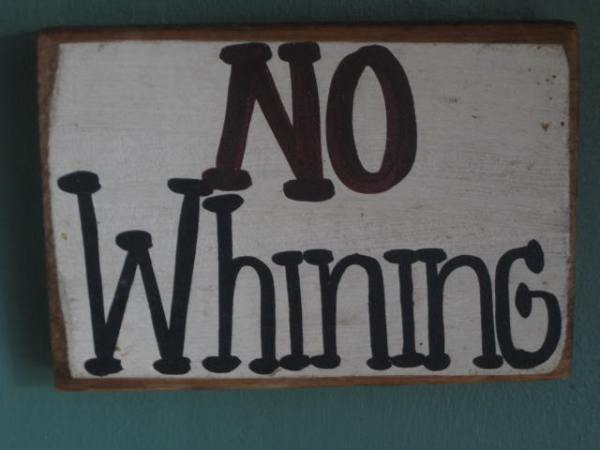
I know I should avoid whining, but I’m going to embrace it and indulge in a little pity party. Then I’ll get on with my day. I decided to follow this approach after seeing a cancer patient interviewed on a t.v. talk show (yes, I watch talk shows these days, another lyme-inspired low). Continue reading →
I tend to call it “going around the mulberry bush.” My therapist calls it circular thinking. But the best analogy, the one that truly tells you how irritating repetitive negative thinking can be, is “like a broken record.”
To those of you too young to have heard a record skip, trust me. The grating sound sets you on edge just like this destructive thought process.
Negative thoughts start zooming around in your brain, one begets another, and pretty soon they are following each other in a maddening loop that keeps playing over and over. The loop invades your days, and it wakes you from slumber at 3 a.m.
“What if I never get better. What if I can’t get my life back. What if I can’t keep my job. What if I lose my house and savings because of out-of-pocket medical costs. What if my spouse/partner/friends abandon me? What if…”
I have two words for you from the great comedian and t.v. therapist Bob Newhart: Stop it. (Sure, this video is tongue-in-cheek and there’s certainly a time for professional therapy. But sometimes you can change the perambulations of your mind all by yourself. And humor definitely helps.)
Cultivate the mental discipline to cut those thoughts off with one swipe of a magic scythe. Because you don’t have room in your life for stress right now.
To recover fully, you need more than medication to kill the bacteria; you need a strong immune system. Do all you can to avoid stress. Start by watching this video. Hopefully you’ll enjoy a laugh.
Then, listen for Bob Newhart’s voice whenever you catch yourself pointlessly repeating worries. And just stop it.
Folks from 100+ countries have visited. Share the link!
The content of this website is provided for general informational purposes only and is not intended as, nor should it be considered a substitute for, professional medical advice.




 LifeLoveLyme