Tag Archives: lyme disease

Believing in Lyme When Looks Are Deceiving

Credit: Lyme Chick's Facebook page

Credit: Lyme Chick

“You look great!”

Many days, I wince when someone says that to me. I want to shout in frustration “I FEEL AWFUL!” And when I try to explain, I want to hear “I believe you”—not “But really, you do look great!”

I’ve felt hurt because even those closest to me don’t see my suffering sometimes. But I’m realizing it’s hard for them to believe how awful lyme can be if I don’t clue them in. Especially when it comes to pain. 

Not long ago, my longtime neighborhood book group got together for a potluck dinner. I was just getting to the point in my recovery where I could leave the house occasionally. So I said I’d love to come if I felt okay. Especially because they let me off the hook when it came to cooking a contribution for the table, which I knew I couldn’t manage.

Happily, I made it to the dinner. A few days later someone sent around a photo that included me. By the time I checked my email, a couple of others in the picture had piped up, making jokes about how the picture should have been photo-shopped…the usual chatter of people who hate photos of themselves.

I’m usually one of them. But I opened the file and had to admit I looked, well—great. Yes, great.

The thing is, I felt like hell on the inside.

Continue reading

Surprised There Aren’t More News Reports About Lyme? Help Get the Word Out

Credit: David Boyle in DC's flickr stream

Credit: David Boyle in DC’s flickr stream

Since learning so much about the horrendous impacts of lyme disease—and living many of them—I am absolutely astonished that I don’t see coverage of this health crisis daily in the news. Lack of information is the reason I got so sick myself.

The few articles I’d seen before I got infected erroneously said lyme is easily treated with a short course of antibiotics, and implied that lyme is no big deal. While this is true for many people, for many others it couldn’t be further from the truth.

I had read that a negative test means you aren’t infected. That’s simply not true; testing is inaccurate. Too bad my health care provider and I didn’t get that information.

Sure, a smattering of articles appear here and there. But not enough. And not enough with a full and accurate picture of this complex illness—and the controversy surrounding it.

Meanwhile,  I’m encountering or hearing about lyme patients every single day now, and just about all of them say they never knew it could be so devastating—or so complex to diagnose and treat—until they got it.

Shouldn’t lyme be covered as often as possible in the media so people can protect themselves? Shouldn’t everyone be alerted so they know how to get a proper diagnosis and treatment if they’ve been infected by a tick? 

Here’s some good news: From my local support group to LymeDisease.org, there’s buzz about a fantastic series of articles on lyme—a series many hope will make it into the Pulitzer Prize spotlight.

Continue reading

Killing Good Bacteria with the Bad

Do the probiotics I take replace the good bacteria wiped out by antibiotics?

Do the probiotics I take replace the good bacteria wiped out by antibiotics?

I’m pretty tired of that perky Jamie Lee Curtis and her “Activia” ads on television. Yeah, I’ll admit it, maybe I’m just jealous that she looks so damned good at her age, while I feel my own looks sliding into oblivion as the years slide by.

But I’ll admit she delivers an important message in those yogurt ads—good bacteria promote digestive health. And I’ve learned they do much more.

A riveting article by Michael Specter titled “Germs are Us” in the October 12 (2012) New Yorker magazine addresses this question: “Bacteria make us sick. Do they also keep us alive?”

Specter reports that “…the destruction of bacteria may contribute to Crohn’s disease, obesity, asthma, and many other chronic illnesses.”

As if I didn’t have enough to worry about with threatening bacteria like Borrelia burgdorferi and Babesia microti roving my body and making me sick, I’m quite concerned that antibiotic treatment is killing too many good guys among the tens of thousands of bacteria species in my body. Continue reading

Gifts from Lyme Disease

IMG_1920

When I was felled by Lyme, my college roommate Tracey said, “I know you don’t see it this way right now, but your Lyme battle is going to change your life in good ways, too.”

My immediate response was, “Yeah, right. Lyme is a nightmare.”

It’s easy to focus on the dark side.

But she’s right. Now that I’m a little better, I see that  chronic illness definitely gives you perspective about what’s important.

Sure, I miss out on a lot of life. But what I can do, despite limitations, is somehow sweeter. Exhilarating, even.

Continue reading

Grief is a Rubber-band Ball

IMG_1852

I’m no stranger to major loss. As a teenager, I lost my beloved family home and other ties to childhood in the wake of huge financial losses for my parents.

Then came the death of my father after a five-year struggle with lymphoma. Later came the excruciatingly slow passing of my mother-in-law to Alzheimer’s, and my own mother’s declining memory. 

Then, the nearly unbearable abyss of divorce. A few years later, I’d only just started to approach feeling whole when a tiny tick transmitted the lyme that knocked me to my knees—and even further down.

The holidays, a touchstone to the past, intensify the grief. I feel it in every cell of my being.

Recently I said to my therapist, who is helping me get through the many stresses of chronic lyme, “A year ago, I thought I had a handle on the losses lyme has sent my way. And I sure thought I had processed all that grief from childhood, and all that terrible pain from the breakup of my family. Why am I so overwhelmed all over again?”

And she said, “Because grief is like a rubber-band ball.” Continue reading

Video: Making a Difference

On a day like today when pain and other symptoms ratchet up and I am totally lymed-out, I can’t get outside to restore my spirits with a healing dose of Nature.

I’ve found, however,  that online natural history videos can be a decent substitute.  I’ve really been missing my work in ocean conservation, so this one called “Saving Valentina” by the Great Whale Conservancy caught my attention.

I share it here not only because it is one of the most amazing wildlife videos I have ever seen, but also because it says so much about life. Sure, it conveys the stunning beauty of whales.

But this story also celebrates the individual action that can make a big difference: Action by a few people in a tiny boat with one small knife saving the life of one of the largest creatures on Earth.

It makes me think of the lyme literate doctors who act with knowledge, courage, and perseverence to help those whose lives are compromised and endangered by lyme disease at a time when the medical community is divided by controversy over this illness. 

Valentina’s boundless joy in the last three minutes of the video says it all. See for yourself.

Boost Your Health with this Superfood: Kefir

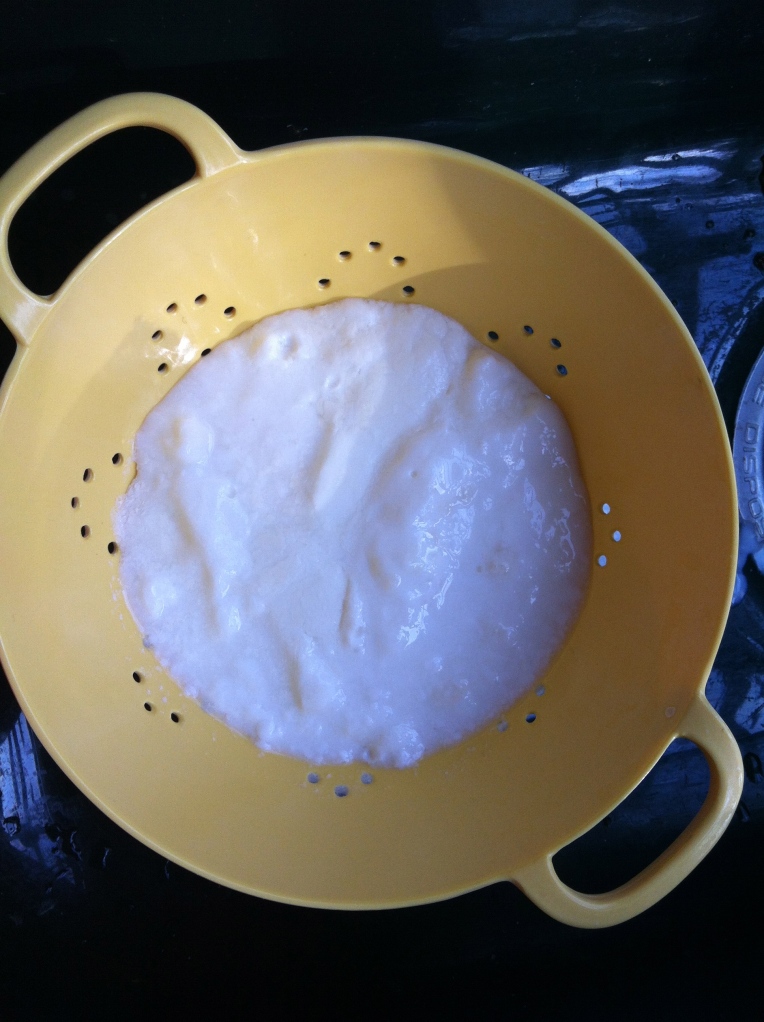
I let my kefir sit long enough to get creamy, but sourness does increase with time.

I let my kefir sit long enough to get creamy; sourness increases with time.

I’d never heard of kefir until my wise and wonderful acupuncturist encouraged me to try it as part of my recovery regimen for Lyme disease. Explaining that the fermented drink has many benefits and would boost my struggling immune system, he pressed a small packet of the starter culture into my hand to take with me.

I read up on this ancient superfood, and discovered its rich history over many centuries. Legend has it that long ago, shepherds in the Caucausus Mountains discovered that milk they carried in leather pouches fermented into tasty kefir as they rambled with their sheep.

Another story says that kefir was a gift to Orthodox Christians in the region from Mohammed, who warned them it would lost its miraculous health benefits if they shared it. People held it close, but kefir inevitably began to spread as its value came to light.

The people of the Caucausus are famous for being long-lived; maybe I could enjoy some of the same benefits. Kefir is loaded with vitamins, calcium, and fiber along with health-promoting bacteria. The National Kefir Association says this drink typically contains three times the probiotics of yogurt.

Studies show that kefir can “stimulate the immune system, enhance lactose digestion, and inhibit tumors, fungi and pathogens— including the bacteria that cause most ulcers.” Who knows, maybe research will show kefir goes after the lyme bacteria Borrelia burgdorferi, too.

Continue reading

It Hurts So Good: The Jarisch-Herxheimer Reaction

"The Scream" by artist Edvard Munch.Credit: Christopher Macsurak's Flickr stream

“The Scream” by artist Edvard Munch.
Credit: Christopher Macsurak’s Flickr stream

Sometimes during my recovery, I want to scream. But I tell myself to hang on. Because with Lyme, you often have to feel worse to get better. Welcome to the Jarisch-Herxheimer Reaction, or “herxing.”

Today, for instance, my chest is tight and burning, and there’s an uncomfortable sensation like ice water running through my veins. I feel ill all over, like you do when you have the flu or a high fever.

There’s more: Joints in my left foot throb, along with both knees and hips. My legs and arms are on fire with a burning pain deep in the tissue, as is my digestive tract. Add in weak muscles and low energy, and you can see why I’m on the sofa.

My mind might as well be underwater, my thinking is so muffled and remote. (As you may have guessed, it’s actually taking me several days to write this post). Chills crawl over my lower back and hips.

On the worst days, I don’t feel up to reading or watching a movie or visiting with a friend by phone. All I want to do is lie here. I’m good with that. Here’s why.

Continue reading

Video: Did You Know Ticks Can Transmit Lots of Infections—Like Babesiosis?

I’m very lucky to have wonderful neighbors. One of them, Marilyn, called me the other day to say she’d seen this segment of “Monsters Inside Me” on Discovery’s Animal Planet. It explores the case of a Lyme patient who was not recovering, and her doctor’s discovery that she had babesia caused by the parasite Babesia microti. Marilyn knows I’m being treated for Lyme and wanted to make sure I knew about this co-infection. She got the message: Lyme patients with babesia need treatment for that along with Lyme in order to recover. I’m also lucky to have a Lyme literate doctor who checked me for co-infections at the start because I had soaking night sweats, a key symptom; my treatment is going well. Babesia can also cause the spleen to rupture; read one patient’s story here. The good news is, babesia can be treated. But first it has to be diagnosed. Please, share this video to help get the word out. And if you want lots more information on babesia symptoms and treatment, see this video by Dr. Robert Horowitz of the Hudson Valley Healing Arts Center in New York. 

5 Gift Ideas for Someone With Lyme

Notes and notepads: I can never have too many.

My all-time favorite gift to receive at holidays—or any time—has always been a vase full of colorful, fragrant flowers. But lately, I have to admit that practical gifts can really make a difference for someone under the weather with lyme.

Here are some ideas:

  1. notes, note pads, and colorful pens for creating reminders
  2. massage gift certificate to relieve stress and pain
  3. gluten-free treats or carry-out gift certificates for easy snacks/meals
  4. maid service for a morning of heavy cleaning
  5. a magazine subscription for those long hours when activity isn’t possible.

Please share your favorites in the comments section below.